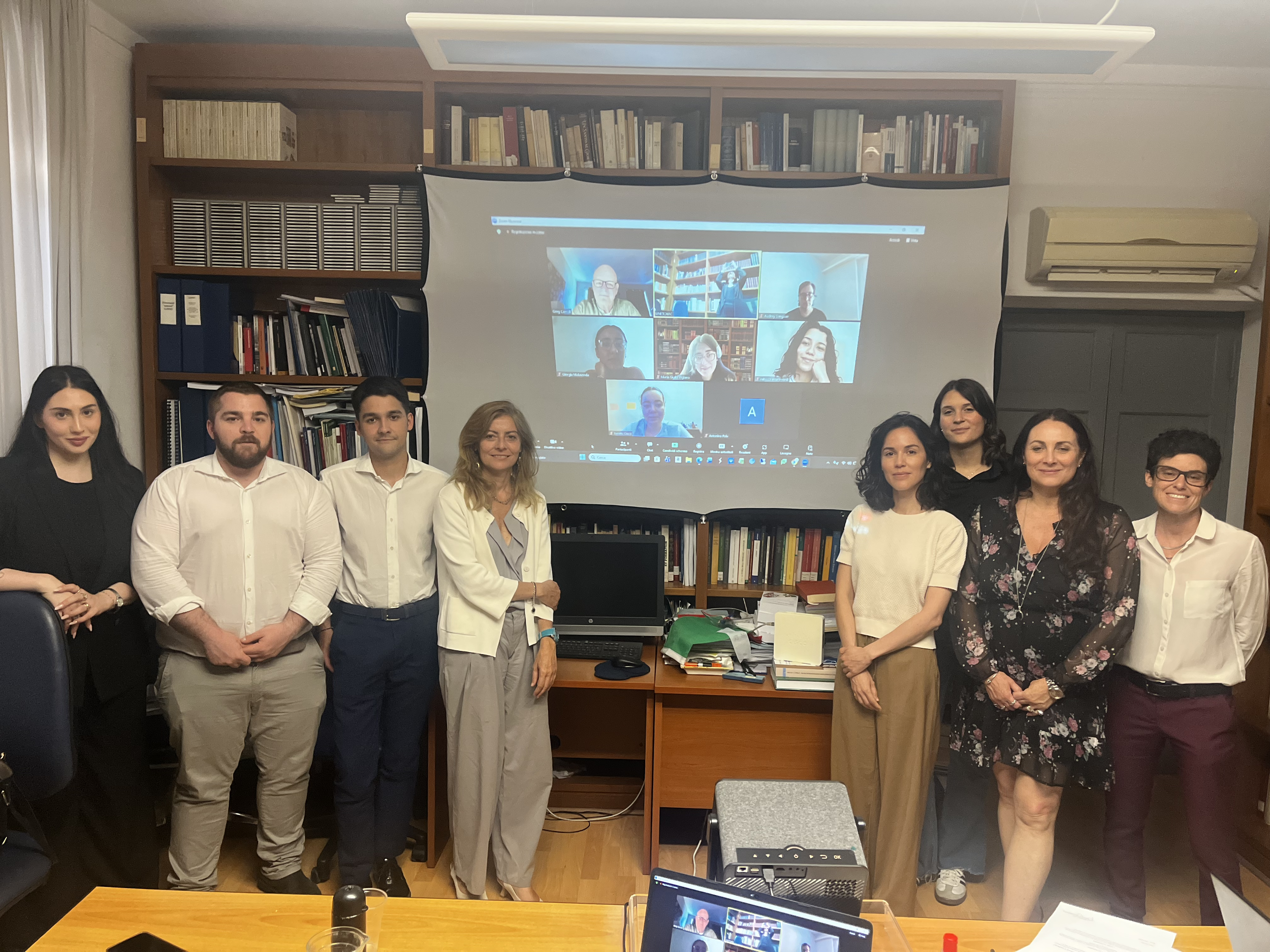
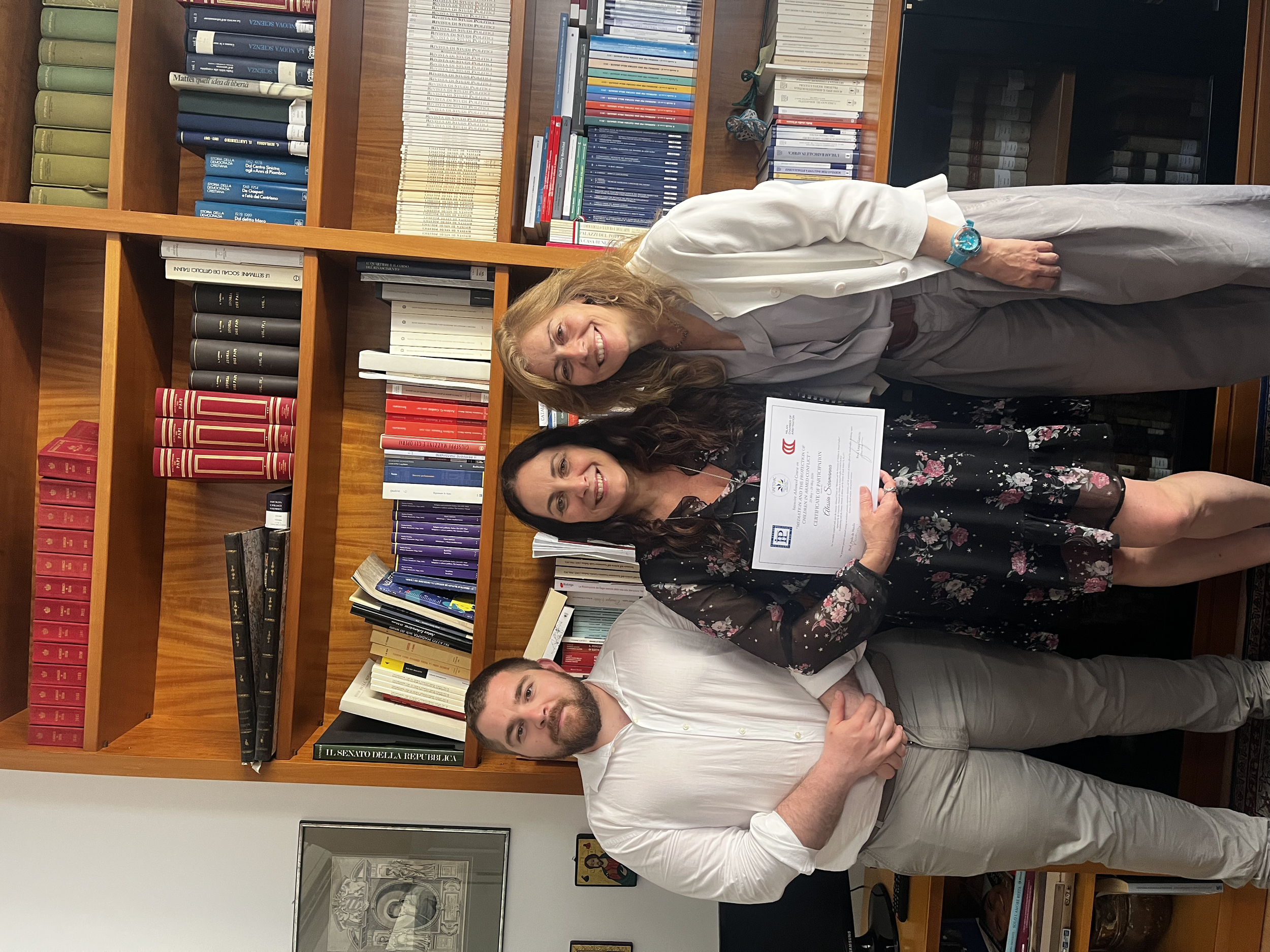
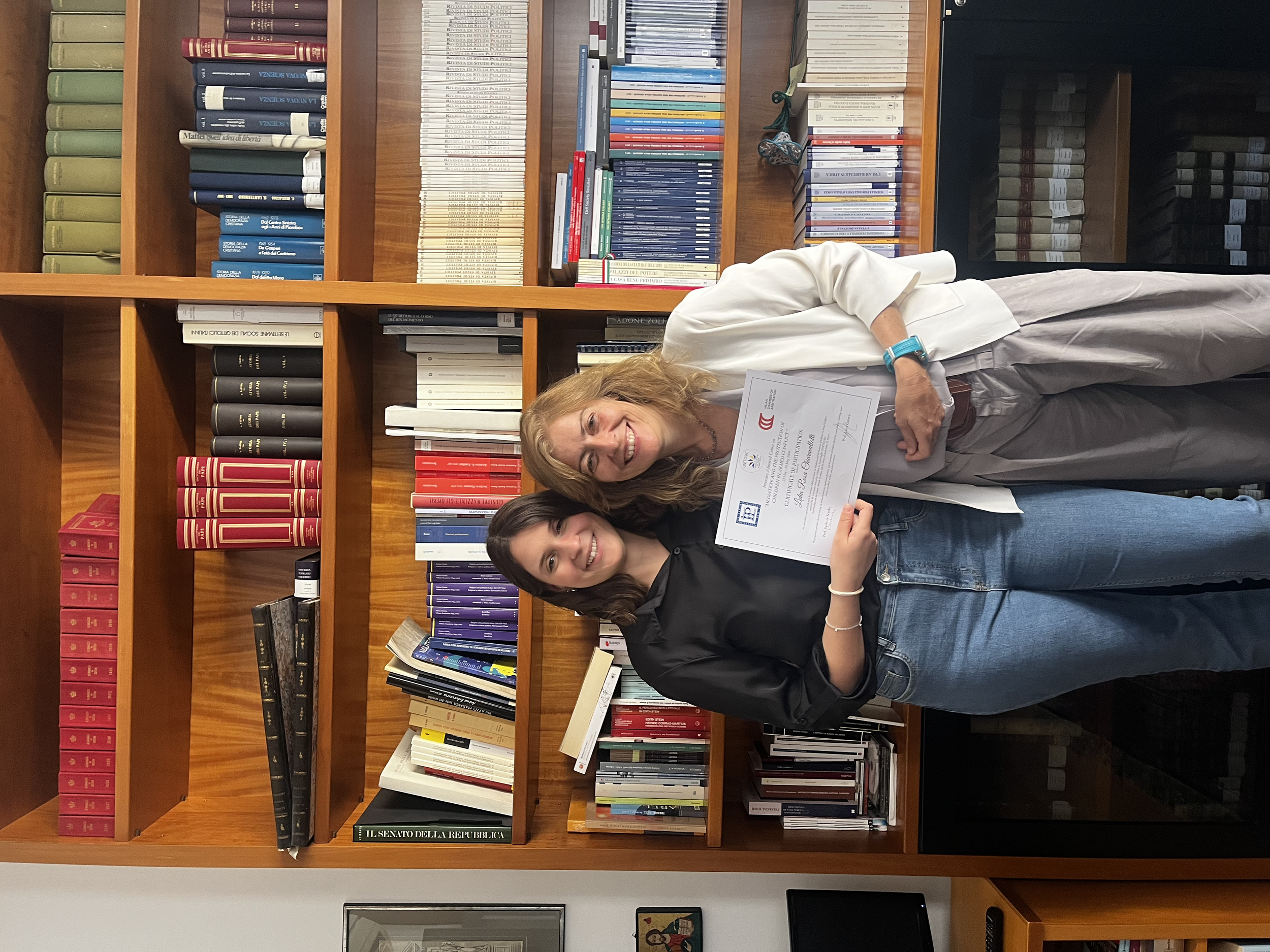
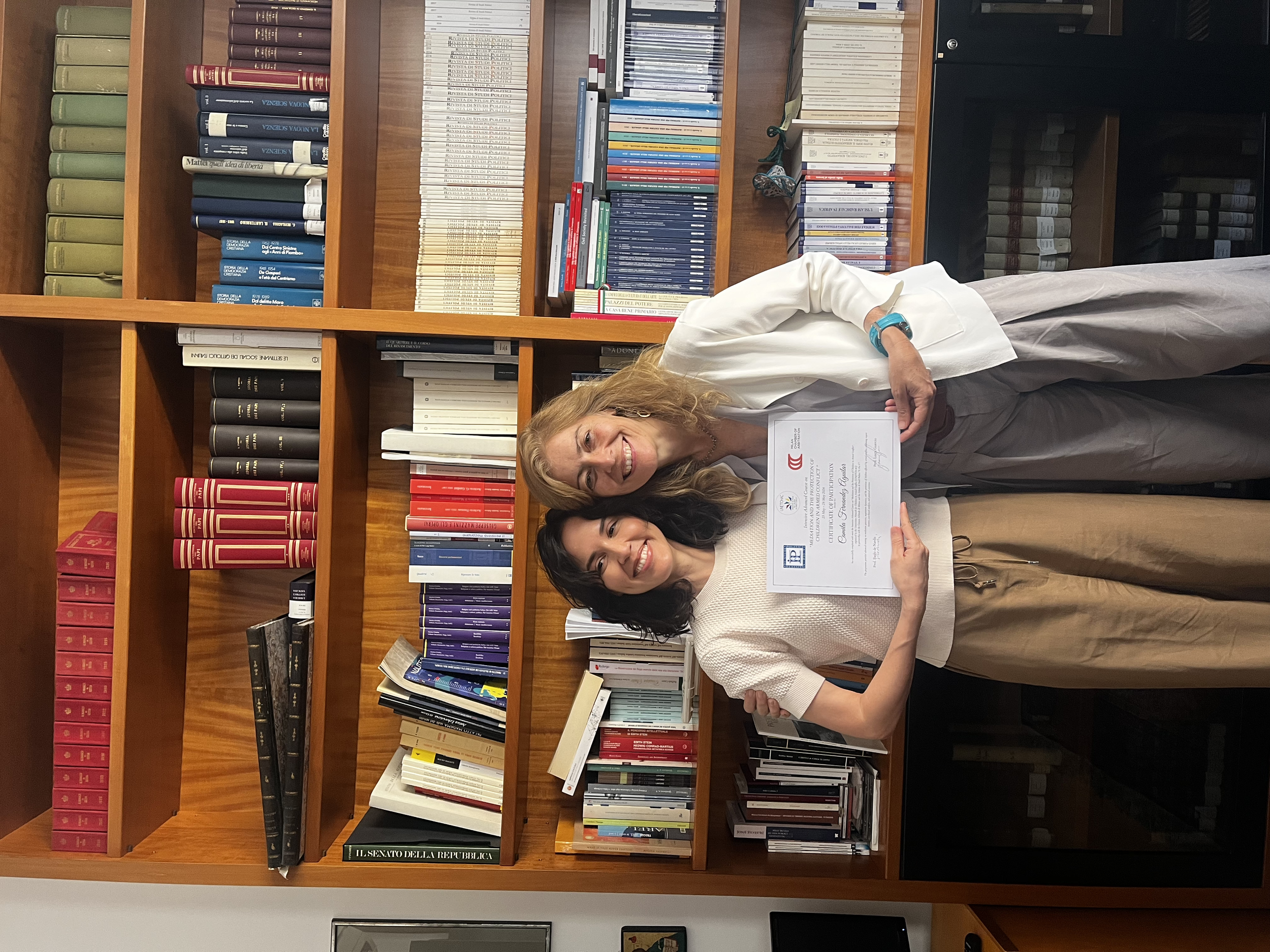
ADVANCE TRAINING COURSE
iii edition - MEDIATION AND THE PROTECTION OF CHILDREN IN ARMED cONFLICT
25 - 28 MAY 2026
VENUE: Rome, Italy
TIMETAMBLE : 10: 00 AM - 01:00 PM (CET) 02:30 PM - 05:00 PM (CET)
FORMAT: Hybrid ( in person and online)
FEE: 200 € in presence 150 € online
Limited spots available
Complete the form by clicking the link.
III MEDIATION AND THE PROTECTION OF CHILDREN IN ARMED CONFLICT - INTENSIVE ADVANCED COURSE
DEADLINE FOR REGISTRATION : 21 MAY 2026
EARLY BIRD REGISTRATION: 10 MAY 2026
CONTAC US : UNETCHACADVANCEDCOURSE@GMAIL.COM
INTRODUCTION
In contemporary conflict scenarios, children are among the most affected and yet often the least considered in mediation and peacebuilding efforts. The inclusion of child protection strategies in peace negotiations and conflict resolution mechanisms is not only a legal obligation but also a fundamental step towards sustainable peace and the safeguarding of future generations. Recognizing this crucial need, the Universities Network for Children in Armed Conflict, with the support of the Istituto di Studi Politici “San Pio V” and the Milan Chamber of Arbitration is pleased to present an intensive advanced course dedicated to exploring the nexus between mediation and child protection.
This course aims to provide participants with legal frameworks, operational tools, and negotiation practices to ensure that children’s rights and needs are at the heart of peace processes.
METHODOLOGY
The course employs an interactive, interdisciplinary approach combining theory and practice:
● Lectures and Presentations – Led by experts in mediation, child protection, and international law, providing in-depth frameworks and practical knowledge.
● Case Studies – Examination of real-life peace processes where child protection provisions were integrated or neglected.
● Workshops and Group Exercises – Interactive sessions for skill-building in stakeholder engagement, drafting agreements, and ethical negotiation.
● Role-playing and Simulations – Practice-based learning to simulate ceasefire negotiations and child-sensitive dialogue.
● Panels and Guest Lectures – Exchange with field professionals and policymakers to link academic learning with operational realities.
TARGET AUDIENCE
This course is designed for professionals, practitioners, and advanced students who are engaged or interested in the fields of mediation, child protection, and conflict resolution. Ideal participants include:
● Mediators and Peacebuilders: Professionals involved in conflict resolution, dialogue facilitation, and peace negotiation processes.
● Child Protection Officers and Humanitarian Workers: Staff from international organizations, NGOs, and agencies working directly with children in crisis and armed conflict contexts.
● Legal and Policy Experts: Practitioners focusing on international humanitarian law, human rights, and the development or implementation of mediation frameworks.
● Researchers and Academics: Advanced students or early-career scholars in the fields of international relations, peace studies, human rights, or security studies
● Government and Institutional Representatives: Individuals engaged in policy planning, humanitarian diplomacy, or multilateral negotiations with a child protection mandate.
OBJECTIVES
1. To Understand the international legal and normative frameworks related to children in armed conflict.
2. To Equip participants with strategies and tools for integrating child protection into peace processes.
3. To Analyse successful and failed case studies in the inclusion of CAAC provisions in mediation.
4. To Practice effective and ethical engagement with armed groups and children.
5. To Promote sustainable and inclusive peace processes through a child-sensitive lens.
AIMS
● Raise Awareness on the necessity of including child protection in peace processes.
● Strengthen Competencies in negotiation, mediation, and stakeholder engagement.
● Bridge Policy and Practice by promoting tested approaches in diverse conflict settings.
● Facilitate Networking among professionals working at the intersection of child protection, mediation, and peacebuilding.
● Encourage Innovation in designing and implementing child-focused conflict resolution mechanisms.
STRUCTURE OF THE COURSE
The course Mediation and the Protection of Children in Armed Conflict will be held in English from 25 to 28 May 2026, in a hybrid format allowing both in-person attendance in Rome, Italy , and online participation via Zoom platform. Daily sessions will be held in the morning from 10:00 to 13:00, with additional afternoon sessions from 14:30 to 17:00.
The course is coordinated by Professor Laura Guercio and Professor Ljubomir Petruljeskov. Sessions will consist of lectures delivered by leading international experts and practitioners, followed by Q&A segments and moderated discussions designed to stimulate active engagement among participants. Sessions will be delivered by distinguished experts and practitioners in the fields of mediation, international law, and child protection, offering participants both conceptual frameworks and case-based reflections.
The course will admit a maximum of 10 participants on site and up to 20 participants online. The standard participation fee is € 200 for on site participants and 150 € for online participants.
Please note that UNETCHAC does not assume responsibility for expenses related to travel, accommodation, or meals, which remain entirely at the charge of participants.
Students coming from disadvantaged areas, will be entitled to discounted rates. The final deadline for applications is fixed at 21 May 2026.
All submitted applications will be reviewed by the Scientific Committee of the Universities Network for Children in Armed Conflict. Applicants will be notified of the outcome of their application via email in due course.
To receive the Certificate of Completion, on-site participants are required to attend 80% of the course sessions. Online participants must attend at least 80% of the sessions (live or, when justified, via recordings) and actively engage in course activities. At the end of the course,
participants may be asked to submit a final project proposal or short essay. The most outstanding contributions may be considered for inclusion in future publications or academic initiatives promoted by the Universities Network for Children in Armed Conflict (UNETCHAC).
Following the course, internship opportunities within the Network and scholarship possibilities for future studies may be offered to the most deserving participants.
For further information or clarification, please contact us at the official course email address:
unetchacadvancedcourse@gmail.com
Programme
Day 1 – Conflict and Child Protection Foundations
25 May,
Morning (10:00–13:00)
● Overview of Children in Armed Conflict: Definitions and Global Trends.Legal Frameworks: CRC, OPAC, UNSCR 1612, 1882, 2427 (Laura Guercio)
● The UN’s Six Grave Violations Against Children And the UN system (UN Representative)
● The judicial protection of children in armed conflict (Paolina Massidda)
Afternoon (14:30–17:00)
● The UN’s Six Grave Violations Against Children And the UN system
● Incorporating CAAC Agenda in Mediation Policies:
- Strategies for Including CAAC in Peace Agreements
- Policy frameworks and institutional best practices
- Data Collection and Monitoring Grave Violations
- Sources, verification, and reporting practices
(TBC) - Ms. Federica SOLA, UN Office of the Special Representative of SG for CAAC
● Creating a zone of physical and psychological safety for the child:
- Managing the mediators biases and respecting cultural differences in defining the optimum condition for children development
- Enabling sustainability of the mediated outcomes despite the unstable operating environments of children caregivers
Mr. Aloysius GOH, Founder and Chief Executive Officer, SAGE Mediation
Mr. Ljubomir PETRULJESKOV, Program Lead Eastern Europe and Central Asia at International Development Law Organization (IDLO); Mediator, JAMS Fellow
Day 2 – Mediation Basics and Integration in Peace Processes
26 May,
Morning (9:30–13:00)
● The Role of Mediators in Protecting Children Mediator responsibilities and challenges Ensuring child-sensitive approaches
Counsel Andrea BANDINI, Co-Vice President - Italian Association for Arbitration (A.I.A.); International Centre for Settlement of Investment Disputes (ICSID) List of Conciliators.
● Listening to Children in Conflict Resolution: Aims, Stages, and Challenges:
Importance and objectives of hearing child’s voice in conflict resolution processes
Main stages of hearing the child’s voice in mediation and beyond
Key challenges faced by specialists when engaging with children during mediation and other dispute resolution procedures
Prof. Agnė TVARONAVIČIENĖ, Professor of Law at Mykolas Romeris University and accredited mediator (CEDR); Chair of the National Mediator Qualification Examination Commission; member of the Mediator Performance Evaluation Commission.
Afternoon (14:30–17:00)
● Case Study Analysis – Sierra Leone and Timor Eat (Shyamala Alagendra); Colombia (Ayesha Umana-Dajud)
- Key actors and negotiation dynamics
- Lessons on integrating CAAC provisions
- Reflection questions for participants
Counsel Shyamala ALAGENDRA, International Criminal Lawyer and former Assistant Director of Public Prosecutions of Fiji
(TBC) - Ms. Ayesha UMANA-DAJUD, J.S.D. candidate at Cornell University; Special Jurisdiction for Peace in Colombia and ICC’s Office of Public Counsel for Victims.
● Simulation Exercise: Drafting a Ceasefire Clause with CAAC Elements
● Debrief and Reflection: key takeaways from simulation
Mr. Ljubomir PETRULJESKOV, Program Lead Eastern Europe and Central Asia at International Development Law Organization (IDLO); Mediator, JAMS Fellow
Day 3 – Engagement, Ethics, and Child-Sensitive Mediation
27 May,
Morning (10:00 – 13:00)
Visit to the Mediation Mechanism of the Rome Bar Council, Followed by a Meeting with Representatives
Mr. Ljubomir PETRULJESKOV, Program Lead Eastern Europe and Central Asia at International Development Law Organization (IDLO); Mediator, JAMS Fellow
Afternoon (14:30–17:00)
● New technologies and mediation with a Child Protection Lens
- Tools and methodologies for mediators
Judge Selvete GERXHALIU, Former Judge at the Constitutional Court of Kosovo, President of DigRights
● Reintegration vs. Re-victimisation
- Rights-based approaches to reintegration
- Preventing cycles of abuse
● Ethical Considerations
- Addressing trauma-sensitive communication
- Ensuring participation without harm
- Prof. Yvonne VISSING, PhD, Director Center for Childhood and Youth Studies, Salem State University.
- Prof. Greg CARROLL, PhD, Professor of Peace and Conflict Studies, Salem State University (USA); Fulbright Specialist.
Day 4 – Tools, Policy, and Practices
28 May,
Morning (9:30–13:00)
● Case study: Iraq and KRG during the ISIS war
- Approaches to post-war child support
Dr. Mahdi NOORULDEEN MOHAMMED, Ph.D in Public Law, Soran University
● Workshop: Building a Child-Sensitive Mediation Framework
- Principles, tools, and checklists for mediators
● Role Play: Dialogue Simulation
- Practice engagement with armed group representatives
Mr. Ljubomir PETRULJESKOV, Program Lead Eastern Europe and Central Asia at International Development Law Organization (IDLO); Mediator, JAMS Fellow
Afternoon (14:30–17:00)
● Breakout Sessions: Multistakeholder Mediation Scenarios
- Simulated mediation exercises with diverse actors
● Final Group Presentations of Mediation Proposals
- Peer review and feedback
Course Evaluation and Certificate Ceremony
Certification
Participants will receive a Certificate of Completion, potentially co-issued by the Universities Network for Children in Armed Conflict and a partnering institution or university. Academic recognition or CPD credits may be available.
Scientific Committee
Laura Guercio
Ljubomir Petruljeskov
Coordination
Antonino Pola
Administrative Committee
Erika Gjeci
Lisa Faccin
Kirill Skantsev